Thursday, July 1, 2010

Snake River Salmon Bring It Home

© Neil Ever Osborne, iLCP

Save Our Wild Salmon and the
International League of Conservation Photographers have joined forces to tell the story of the Snake River's one of a kind salmon and the place they call home.

Since setting foot in the Sawtooth Valley this week, we've been on a mission to capture late spring wildflowers lighting up meadows, the pristine waters of rivers and streams cutting through the landscape and the grandeur of the rugged Sawtooth Mountains reaching up from the base of Redfish Lake. We're here to give a face to the name of the fight to save the Snake River's one of a kind salmon.
© Neil Ever Osborne, iLCP

Yesterday, we caught up with Ed Cannady, the backcountry ranger for the Sawtooth National Recreation Area. Ed has lived in or near the valley for more than 30 years and has logged more miles of backcountry trails in this place than pretty much anyone. Having racked up miles on every single trail in the Sawtooth and White Cloud mountain ranges (seriously), Ed's a walking, talking encyclopedia on all things involving wilderness and wildlife.

We hiked through sage and aspen to the top of a pitch near Boundary Creek and overlooking the Sawtooth range. With a storm rolling in, we took cover from the rain under a massive lodgepole pine. As we looked over the dark clouds looming at the peaks of the mountains, I asked Ed how salmon are connected to the landscape sprawling out below.
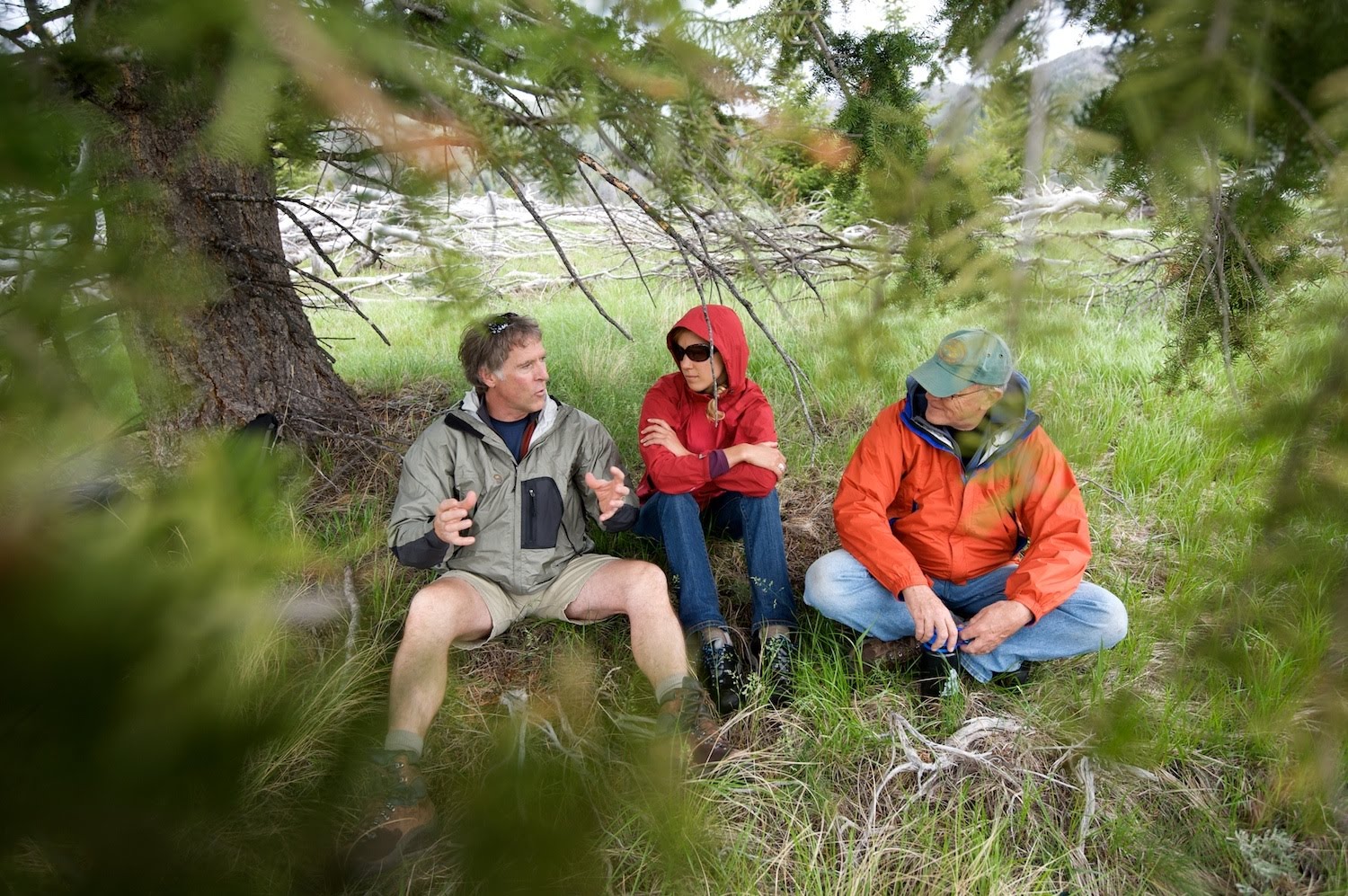
© Neil Ever Osborne, iLCP

"It's not how this landscape benefits salmon, it's how salmon benefit this land," he said. "Salmon are one of the most noble creatures out there. When you stand on the riverbank and watch this mother salmon digging her redd, knocking the flesh off her own body, it's overwhelming to think about what these fish take on to survive. We're the last generation who can save them. And I don't want to be the generation who witnesses the glaciers disappear from Glacier National Park, or see salmon disappear from the Salmon River, or sockeye disappear from Redfish Lake."

Wednesday, June 30, 2010

Looking For Goats And Finding Adventure

© Neil Ever Osborne, iLCP

Save Our Wild Salmon and the
International League of Conservation Photographers have joined forces to tell the story of the Snake River's one of a kind salmon and the place they call home.

Hopping into Nappy Neaman's pick-up, there was no mistake of what we were after. Known by many in the Sawtooth Valley as the "Goat Man", Nappy is a local legend with a tenacious passion for seeking out the nimble, rugged mountain goats of this landscape.

Nappy Neaman, aka "Goat Man" searching for goats at Phyllis Lake. © Neil Ever Osborne, iLCP

After a massive sheep traffic jam and more than 6 hours hiking to the goat's favorite haunts like Phyllis Lake and the aptly named Goat Rocks, when we finally caught our first glimpse
of three adult goats and two babies perched high on a peak.

More than a mile away, we were too far to snap photos, but the thing about adventures (and wildlife scouting missions) is that you never know what you're going to end up with. The adventure is all about the story. And standing there on the trail looking up at those goats, it's crystal clear why this place is so special.

Nappy said: "Why these goats traveled from the North to live in these mountains, we don't know. And why salmon travel from here to the ocean only to battle their way all of this way back to these very streams, we just don't know. We don't know everything. But it's all connected. No one is more important than the other. But if you lose one of them, you effect every single one of them... You lose a piece of why this place is so special."

Photos © Neil Ever Osborne, iLCP

Tuesday, June 29, 2010

One of a Kind: Telling the Story of Snake River Salmon

© Neil Ever Osborne, iLCP

Save Our Wild Salmon and the
International League of Conservation Photographers have joined forces to tell the story of the Snake River's one of a kind salmon and the place they call home.

Snake River salmon swim more than 900 miles inland and climb almost 7,000 feet to reach their spawning grounds — the highest salmon spawning habitat on the planet , and the largest and wildest habitat left in the continental United States. These one of a kind salmon travel farther and higher than any other salmon on Earth. And this week, we're here with iLCP rockstar Neil Osborne and Idaho Rivers United's Greg Stahl and Tom Stuart to document this incredible place and the wildlife that live here.

"Look around you. We're standing in the middle of the largest block of wilderness left in the Lower 48. All of this is protected. All of it. And it always will be.
This right here is Noah's Ark for salmon. But it's up to us to make sure they make it here." — Tom Stuart said standing atop Nip and Tuck near Stanley Idaho and looking over the Sawtooth Valley.

Stay posted here for daily updates from the field!


Monday, June 21, 2010

June Hog edition!

Wild Salmon & Steelhead News - June 2010
 
june.hog We have a whopper of an update for you this month.  Okay, maybe not as big as that guy over there -> but close.  We've got reactions to President Obama's salmon plan, a great story from Daniel Jack Chasan, an important update on Washington State's efforts seeking leadership from their senators, and this month we celebrate a key member of the marine ecosystem - the orca. 
Read on...

Note: Pictured here is one of the legendary June Hogs, the largest salmon ever caught in the Columbia River and maybe the world. Some fish grew to three to four feet in length and weighed 75-100 pounds. These salmon were wiped out with the completion of Grand Coulee Dam in 1938. Photo courtesy of the Columbia River Maritime Museum.

Communities around the Northwest and nation express disappointment with another do-nothing plan.

Are you listening, Senators Murray and Cantwell? 

National Geographic launches new interactive website, highlights the incredible migration of the one-of-a-kind Snake River salmon.
Business and community leaders in Washington State make public call for leadership in Snake River salmon crisis

Partners in Washington state work to recover Southern Resident Killer Whales of the Puget Sound

Monday, June 7, 2010

Let's really talk about taking down those Snake River dams

Economic effects have long been cited as reasons to keep the dams in place. While some inland businesses and farmers are willing to look at how dam removal could work for their communities, the leadership for a larger conversation has been missing. Are you listening, Sen. Murray?


By Daniel Jack Chasan

June 7th, 2010 - If the four lower Snake River dams come down, will they drag the economy of eastern Washington and western Idaho down with them? Salmon advocates don't think so.

They think that anyone who takes an unbiased look at the costs and benefits of those dams will call in the bulldozers. They have argued for years that the dams should be breached, so that Idaho salmon populations have a better shot at recovery. But they say they'll take a chance that if someone weighed all the costs and benefits, the dams would stay. They want somebody to do the math.

Save Our Wild Salmon and its allies in a new Working Snake River for Washington coalition have gotten more than 60 ”business owners and community leaders in eastern Washington and its border communities in Idaho” to write Sens. Patty Murray and Maria Cantwell, asking them to "bring the affected stakeholders in our region together, to talk and work directly together to seek solutions."

Read more of Chasan's "Let's really talk about taking down those Snake River dams"