Thursday, July 8, 2010
Salmon, Wildlife and Connecting the Dots in the Sawtooth Valley
Save Our Wild Salmon and the International League of Conservation Photographers have joined forces to tell the story of the Snake River's one of a kind salmon and the place they call home.
Not since I was little, have I searched for wildlife so hard.
It's all so clear to kids. Everything is obviously interconnected. And everything is exciting. Their point of view of the world is untainted and hopeful. But somewhere along the way, we adults have lost that simplicity to our lives. And I'm lucky enough to say that one week reminded me of how important that simplicity is.
Last week I got to think, see (and act) like a kid again. We rose at 5a.m. every day to catch the sunrise and didn't stop again until 10p.m. when the sun went down. While the sun was our guide, we were also out to catch wildlife. I have to admit, I was a bit pessimistic about our chances of snagging good wildlife shots, but we were determined... And incredibly lucky.
When you're out there stalking a moose in the woods, or hiding behind sagebrush to get the perfect shot of a pronghorn, or staring for hours staring at the river hoping for a glimpse of the first salmon runs, it's really not that difficult to see how all of these animals are connected.
These salmon that migrate from the ocean are packed with nutrients, carrying them the forests and rivers, and hundreds of animals that exist on land and water. They're little powerhouses. When you simplify that process, it's even more clear...
When salmon come home to spawn and die, the forest has a feast. Eagles, ospreys, bugs, raccoons, wolves, bears and riparian grasses and trees all dine on these iconic fish. From there, it's a domino effect. Deer, elk, bighorn sheep and more dine on the lush grasses by the river. And more wolves and bears eat them. And hey, humans are part of the equation too — eating salmon and large game animals.
Once you break it down. It's clear as day. We're all connected and our futures rely on that interconnectedness. You take one piece out, and it affects every single one of us in one way or another. We lose the way our ecosystem works.
Let's make sure that doesn't happen with these one of kind fish. Take action to save our wild salmon today!
Monday, July 5, 2010
Proud To Be An American? Save Salmon.
Save Our Wild Salmon and the International League of Conservation Photographers have joined forces to tell the story of the Snake River's one of a kind salmon and the place they call home.
Think bald eagles are patriotic? Check out this amazing photo from ILCP's Neil Osborne, then take action to save their favorite food — wild salmon!
Friday, July 2, 2010
To Find the Perfect Shot, Sometimes You Have to Get Wet...
Save Our Wild Salmon and the International League of Conservation Photographers have joined forces to tell the story of the Snake River's one of a kind salmon and the place they call home.
Snake River Salmon: An Epic Migration
Save Our Wild Salmon and the International League of Conservation Photographers have joined forces to tell the story of the Snake River's one of a kind salmon and the place they call home.
Snake River sockeye make an epic migration each year to Redfish Lake in the Sawtooth Valley, climbing nearly 7,000 feet and swimming more than 900 miles to get there. To get a visual — that’s the distance from Denver to Chicago and higher than five Empire State Buildings stacked one on top of another.
In addition, these red fish tackle an eight-dam gauntlet on the Columbia and Lower Snake Rivers. The tenacity and determination of these fish is undeniable and at times unbelievable. It's no wonder that they are often referred to as the lifeblood of the Northwest's signature rivers.
Yesterday, we hit up Dagger Falls on a late afternoon shoot, where Snake River chinook were jumping up the falls. It's endlessly inspiring to watch these fish launch themselves up a mass of churning whitewater over and over until they disappear through the current.
"Perched precariously on a rock with Dagger Falls whitewater below, I encountered for the first time the largest of the salmon species, the chinook salmon, demonstrating endurance and perseverance like no other animal. I now plan to help this story."
The trip was a first for iLCP photographer Neil Osborne and Idaho Rivers United's Greg Stahl and I watched him from the bank. He would turn to us often, wide-eyed and grinning. And with every leaping fish and click of the shutter, it was clear that these iconic fish had found a new ally.
From watching Neil's encounter yesterday, I have to believe that if more people took a moment to watch these fish fight so hard to survive that they'd be encouraged to act. And that's exactly why we're here — to bring this epic migration home.
Thursday, July 1, 2010
Snake River Salmon Bring It Home
Save Our Wild Salmon and the International League of Conservation Photographers have joined forces to tell the story of the Snake River's one of a kind salmon and the place they call home.
Since setting foot in the Sawtooth Valley this week, we've been on a mission to capture late spring wildflowers lighting up meadows, the pristine waters of rivers and streams cutting through the landscape and the grandeur of the rugged Sawtooth Mountains reaching up from the base of Redfish Lake. We're here to give a face to the name of the fight to save the Snake River's one of a kind salmon.
Yesterday, we caught up with Ed Cannady, the backcountry ranger for the Sawtooth National Recreation Area. Ed has lived in or near the valley for more than 30 years and has logged more miles of backcountry trails in this place than pretty much anyone. Having racked up miles on every single trail in the Sawtooth and White Cloud mountain ranges (seriously), Ed's a walking, talking encyclopedia on all things involving wilderness and wildlife.
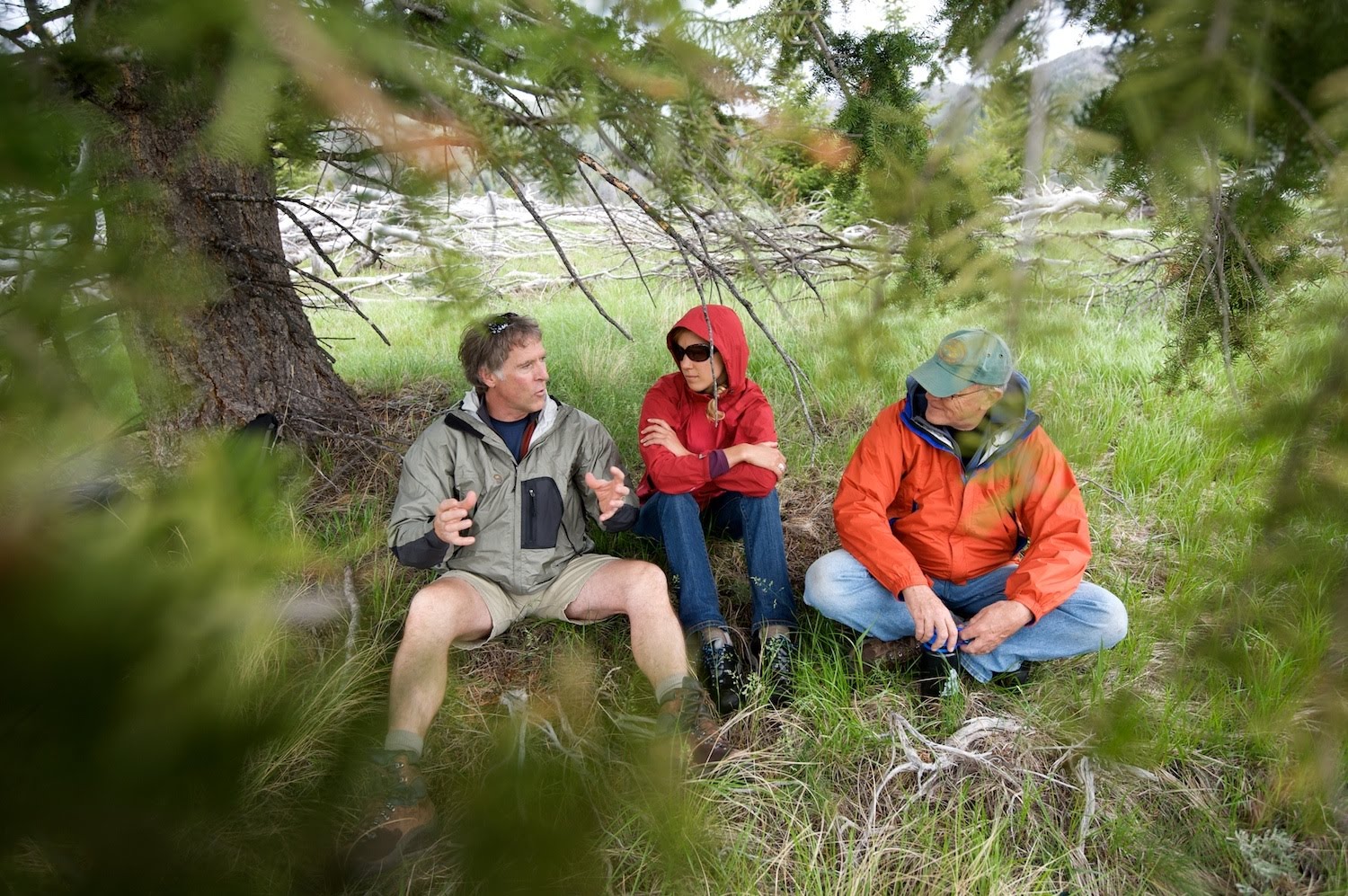
We hiked through sage and aspen to the top of a pitch near Boundary Creek and overlooking the Sawtooth range. With a storm rolling in, we took cover from the rain under a massive lodgepole pine. As we looked over the dark clouds looming at the peaks of the mountains, I asked Ed how salmon are connected to the landscape sprawling out below.
"It's not how this landscape benefits salmon, it's how salmon benefit this land," he said. "Salmon are one of the most noble creatures out there. When you stand on the riverbank and watch this mother salmon digging her redd, knocking the flesh off her own body, it's overwhelming to think about what these fish take on to survive. We're the last generation who can save them. And I don't want to be the generation who witnesses the glaciers disappear from Glacier National Park, or see salmon disappear from the Salmon River, or sockeye disappear from Redfish Lake."
Subscribe to:
Comments (Atom)